






How to Select a Fluid-Delivery Pump for Commercial Cleaning Robots
2026-08-02 20:37:37
Commercial cleaning robots are widely used in shopping malls, office buildings, hospitals, hotels, factories, and warehouses. Compared with household cleaning equipment, commercial machines cover larger areas, operate for longer periods, and must deliver water and detergent reliably while moving, turning, and experiencing continuous vibration.
In these machines, the clean-water pump transfers tap water from the onboard tank to the brush or liquid outlet area. A separate detergent pump supplies cleaning chemicals according to the selected cleaning program.
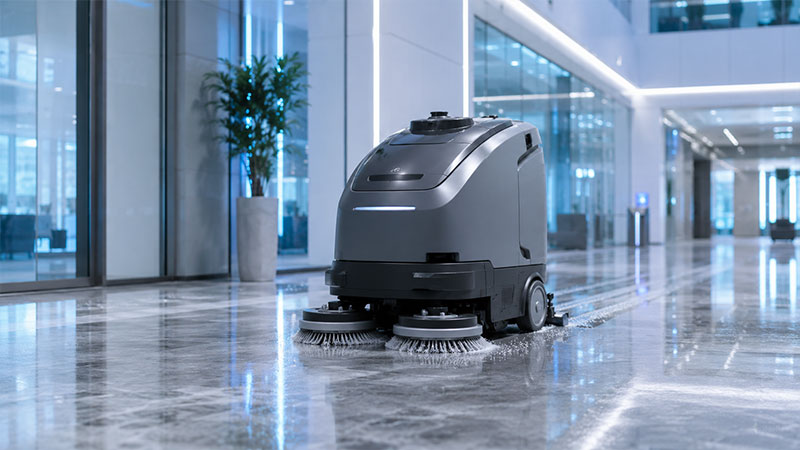
The pump must not only meet the required flow rate. It must also adapt to limited installation space, intermittent operation, equipment vibration, batch production requirements, and the overall cost target of the machine.
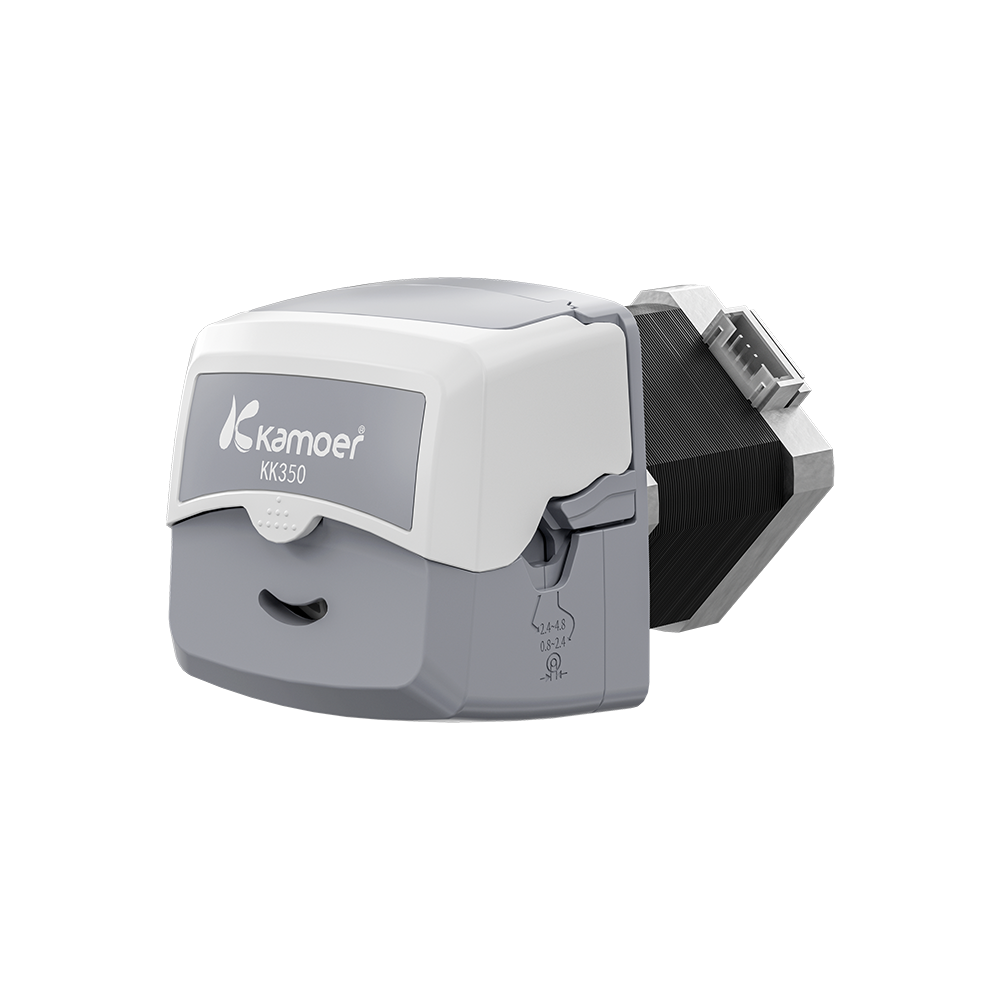
In one cost-sensitive commercial cleaning robot application, the Kamoer KPHM600 peristaltic pump is used for clean-water delivery, while the KPHM100 peristaltic pump transfers detergent. The two pumps perform separate water and chemical delivery functions while balancing installation flexibility, operating stability, and system cost.
Application Overview
Equipment: Commercial cleaning robot or robotic floor scrubber
Function of KPHM600: Transfer tap water from the clean-water tank to the brush or liquid outlet area
Quantity: One pump per machine
Operating mode: Intermittent operation, with a maximum continuous running time of approximately 30 minutes per cycle
Installation conditions: Compact internal space and two installation configurations required
Additional pump: KPHM100 for detergent transfer
Solution positioning: Basic water and detergent delivery with controlled system cost and stable batch supply
How Does the Fluid System Work?
Commercial cleaning robots normally contain a clean-water tank and a separate detergent container.
When the machine starts cleaning, the KPHM600 draws tap water from the tank and transfers it through the internal tubing to the brush or liquid outlet area. The KPHM100 draws detergent from its container and supplies it according to the machine program.
A typical fluid-delivery process can be summarized as:
Clean-water tank → KPHM600 water transfer → independent or programmed detergent delivery → liquid supply to the brush area
The exact detergent injection point, valve arrangement, and tubing configuration can be adjusted according to the machine’s fluid-system design.
Separating clean-water and detergent delivery allows the controller to manage both functions independently. For example, the robot can reduce detergent use during light cleaning or run only the water pump during a rinsing cycle.
Why Use a Peristaltic Pump for Water Transfer?
A peristaltic pump moves liquid by repeatedly compressing flexible tubing with rotating rollers. The liquid remains inside the tubing and does not directly contact the gears, motor, rollers, or other transmission components.
This operating principle provides several practical advantages for commercial cleaning equipment.
The Liquid Only Contacts the Tubing
Tap water flows entirely through the pump tubing. The wetted path is clearly defined, and the risk of liquid entering the motor or gear transmission is reduced.
Self-Priming Operation
A peristaltic pump can draw water from the tank without requiring the pump chamber to be filled in advance. This makes it suitable for intermittent operation and frequent start-stop cycles.
Simple Program Control
The pump can be connected to the cleaning robot’s main controller and switched according to the brush status, cleaning mode, or machine operating program.
Clear Maintenance Procedure
The tubing is the main wetted component and consumable part of the pump. When it reaches the end of its service life, the delivery performance can be restored by replacing the tubing rather than replacing the entire pump.
Commercial cleaning robots are mobile machines, however. Continuous vibration, frequent starts and stops, and compact installation place higher demands on the transmission, tubing-retention structure, and wear resistance of the pump.
How Can Stable Flow Be Maintained Under Continuous Vibration?
Commercial cleaning robots repeatedly move, turn, accelerate, and stop. They may also travel across tile joints, ramps, or slightly uneven floors.
If the internal gear clearance of the pump is too large, machine vibration may affect roller movement and change the compression applied to the tubing. This can result in unstable flow.
Unstable water delivery may cause:
- Variations in liquid output at the brush
- Insufficient water in some cleaning areas
- Uneven distribution of cleaning liquid
- Differences in cleaning performance between machines
The KPHM600 uses a precision gear transmission with reduced mechanical clearance.
More stable gear engagement helps maintain consistent roller movement while the robot is travelling and vibrating. This reduces the influence of mechanical vibration on the pumping process and provides a stronger mechanical basis for stable water delivery.
How Can Tubing Migration and Cutting Be Reduced?
During peristaltic operation, the rollers repeatedly compress the tubing. If the pump head does not secure the tubing effectively, the tubing may gradually move under the combined effects of vibration and friction.
Tubing displacement can lead to:
- Changes in tubing position
- Excessive compression in a localized area
- Uneven tubing wear
- Cutting by the roller or pump-head edge
- Reduced flow or complete delivery failure
The KPHM600 uses an integrated tubing-locking pump head that secures and limits the movement of the tubing.
Under long-term operation and continuous vibration, this structure helps reduce lateral tubing movement and lowers the risk of misalignment, migration, and localized cutting.
For unattended or minimally supervised cleaning robots, secure tubing retention affects not only tubing life but also the ability of the machine to complete cleaning tasks continuously.
How Can Wear of the Tubing, Rollers, and Pump Head Be Improved?
The tubing, rollers, and pump head are the main components exposed to repeated compression and friction during peristaltic pumping.
If the materials, dimensions, and tubing compression are not matched correctly, several problems may occur:
- Premature tubing wear
- Roller-surface wear
- Changes in tubing compression
- Gradual loss of flow stability
- More frequent consumable replacement
The KPHM600 uses upgraded wear-resistant rollers and pump-head components and is designed to work with BPT tubing.
The combination of wear-resistant mechanical parts and matched tubing helps improve the long-term compression and friction conditions. It can reduce the risk of premature tubing damage and provide a stronger basis for extending the consumable replacement interval.
Actual tubing life is still affected by:
- Motor speed
- Continuous running time per cycle
- Daily number of starts and stops
- Tubing compression
- Ambient temperature
- Equipment vibration
- Pump installation
Before mass production, the tubing should be tested according to the actual operating program of the cleaning robot. Dynamic operating tests are more representative than static immersion tests or short-term sample testing alone.
How Can the Pump Be Installed in a Compact Machine?
A commercial cleaning robot must accommodate the water tank, battery, drive motors, brush mechanism, controller, sensors, and fluid components within a limited internal space.
Different machine models may also use significantly different internal layouts. A pump with only one installation configuration may require additional brackets or relocation of other components.
The KPHM600 has a compact structure and supports two installation configurations, allowing the pump direction and mounting position to be adjusted according to the available space.
This design helps equipment manufacturers:
- Use limited internal space more efficiently
- Reduce bracket and structural modifications
- Support different machine layouts
- Shorten the design and assembly process
Why Was a Brushed Motor Selected for This Project?
The KPHM600 uses a brushed motor.
Compared with stepper or brushless motor solutions, a brushed motor has a relatively simple drive and control structure. This helps reduce the initial cost of both the pump and the machine control system.
In this application, the pump operates intermittently, with a maximum continuous running time of approximately 30 minutes per cycle. Its main task is basic clean-water transfer, and the system does not require sophisticated closed-loop flow control.
A brushed motor therefore provides a suitable cost-performance balance for the actual operating conditions.
This type of solution is particularly suitable for projects that:
- Are sensitive to equipment cost
- Use intermittent pump operation
- Have limited continuous running time
- Do not require high-precision closed-loop metering
- Prefer a simple control system
- Require mature and stable batch supply
The suitability of a brushed motor should still be evaluated against the total daily operating time, start-stop frequency, target service life, and maintenance interval. Projects requiring much longer continuous operation or a higher lifetime target may require a different motor or pump configuration.
What Is the Role of the KPHM100?
In this fluid-delivery solution, the KPHM100 is used to transfer detergent.
Detergent consumption is normally lower than clean-water consumption, so a smaller peristaltic pump can be used for this function. The KPHM100 uses a relatively simple drive and control arrangement, making it suitable for routine detergent transfer while helping control the overall cost of the fluid system.
Independent control of the water and detergent pumps allows the machine to:
- Deliver clean water without detergent
- Add detergent according to the cleaning program
- Adjust chemical delivery time for different cleaning modes
- Stop chemical delivery when detergent is not required
- Continue delivering water after detergent dosing stops
This arrangement is straightforward to control and can help reduce unnecessary detergent consumption.
The detergent formula, concentration, and temperature may affect tubing life. Before final selection, the chemical compatibility of the tubing should be checked against the actual detergent and verified through both immersion and dynamic pumping tests.
The KPHM100 is intended for basic detergent transfer. Applications requiring millilitre-level precision, automatic mixing of two detergents, or higher flow repeatability should use a more advanced metering solution selected according to the specific requirements.
Why Does Batch Consistency Matter?
Commercial cleaning robots are normally manufactured in batches and require long-term component supply.
If pumps from different production batches vary significantly in flow, tubing compression, mounting dimensions, or operating behaviour, the differences may increase machine calibration, quality-control, and after-sales service requirements.
Pump evaluation should therefore cover more than the performance of a single sample. Equipment manufacturers should also consider:
- Batch-to-batch flow consistency
- Pump-head assembly consistency
- Tubing compression consistency
- Dimensional stability
- Long-term component availability
- Continued project support
Kamoer has an established manufacturing and supply system, supported by patents and product certifications. This enables long-term support for commercial cleaning robot projects and helps reduce the risk associated with product changes or supply interruption.
A Fluid-Delivery Solution That Balances Performance and Cost
In this commercial cleaning robot application, the KPHM600 transfers clean water, while the KPHM100 transfers detergent. Together, the two pumps form a basic fluid-delivery system.
The main characteristics of the solution include:
- Independent clean-water and detergent delivery
- Suitability for intermittent operation
- Maximum continuous operation of approximately 30 minutes per cycle
- Brushed motor design with simplified drive and control
- Compact size for limited internal space
- Two installation configurations
- Precision gear transmission for improved vibration resistance
- Integrated tubing retention to reduce migration
- Wear-resistant rollers and pump-head components
- Mature production capability for long-term batch supply
How Should a Pump Be Selected for a Commercial Cleaning Robot?
Pump selection for commercial cleaning robots should consider:
- Liquid type
- Required flow rate
- Maximum continuous running time
- Total daily operating time
- Equipment vibration
- Available installation space
- Motor and control method
- Tubing maintenance interval
- Batch consistency
- Target equipment cost
The KPHM600 is suitable for commercial cleaning robot projects that transfer tap water, operate intermittently, have limited installation space, and require a practical balance between performance and system cost.
Its precision gear transmission, integrated tubing-locking pump head, and wear-resistant structure help address flow variation, tubing migration, tubing cutting, and premature consumable wear in mobile equipment.
Combined with the KPHM100 detergent pump, it provides a mature, straightforward, and cost-effective fluid-delivery solution for commercial cleaning robots.
Kamoer is a leading enterprise in reliable miniature pumps and precision fluid-control technology. Based on the required flow, liquid type, control method, operating time, installation space, and project cost, Kamoer can provide pump selection and customization support for clean-water delivery, detergent transfer, chemical metering, workstation refilling, and other fluid-handling functions in commercial cleaning equipment.