





Peristaltic Pumps for Beverage Dispensers: Accurate Syrup and Concentrate Dosing
2026-07-02 22:58:52
Introduction
In modern beverage dispensing equipment, taste consistency depends not only on the recipe, but also on how accurately each liquid ingredient is delivered. Whether the system is adding syrup into a soda, dosing fructose into milk tea, transferring concentrate into a juice dispenser, or delivering cleaning liquid through internal lines, the pump plays a critical role.
Peristaltic pumps are widely used in beverage dispensing systems because the liquid only contacts the inside of the tubing. The pump head, rollers and motor remain outside the fluid path. This tube-based design makes peristaltic pumps suitable for hygienic liquid handling, easy maintenance and repeatable dosing in compact beverage equipment.
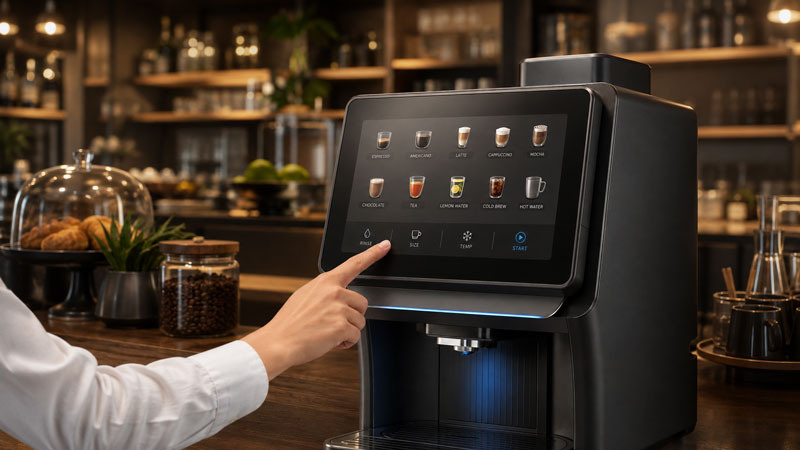
For OEM manufacturers of beverage dispensers, coffee machines, milk tea machines and juice systems, choosing the right peristaltic pump can improve drink consistency, reduce ingredient waste and simplify equipment maintenance.
Why Accurate Syrup and Concentrate Dosing Matters
Beverage machines often handle ingredients with very different properties: sugar syrup, fructose, fruit concentrate, coffee flavoring, milk-based additives, tea concentrate, chocolate sauce or cleaning solution. Each liquid must be delivered in the right amount at the right time.
A small dosing error may result in noticeable taste variation. Too much syrup makes the drink overly sweet. Too little concentrate makes the beverage taste weak. In commercial environments, this inconsistency directly affects customer experience and brand reputation.
Accurate dosing helps beverage equipment manufacturers achieve:
- Consistent taste from cup to cup
- Better control of sugar, flavor and concentrate ratios
- Reduced ingredient waste
- More stable recipe standardization across different machines
- Easier automation for self-service and unattended beverage equipment
- More predictable operating cost for beverage shops and chain stores
This is why peristaltic pumps are often selected for syrup, concentrate and flavor dosing applications.
How Peristaltic Pumps Work in Beverage Equipment
A peristaltic pump moves liquid by compressing a flexible tube with rotating rollers. As the roller moves along the tube, it pushes the liquid forward. When the tube returns to its original shape, it creates suction and draws more liquid into the line.
This principle brings several advantages for beverage equipment:
1. Isolated Fluid Path
The beverage ingredient only contacts the tubing. The liquid does not enter the motor, gearbox or pump housing. This helps reduce contamination risk and makes the pump suitable for hygienic dosing applications.
2. Simple Tube Replacement
For beverage equipment, tubing is a consumable part. When the tube reaches the end of its service life or when the liquid needs to be changed, the tube can be replaced without opening a complex pump chamber.
3. Suitable for Viscous Ingredients
Many beverage ingredients are more viscous than water. Syrup, fructose, chocolate flavoring and fruit concentrate can create higher load on the pump. Peristaltic pumps are suitable for many of these liquids because the liquid is pushed forward by tube compression rather than by internal valves.
4. Easy Control Integration
By controlling motor speed, running time or pulse signals, a peristaltic pump can deliver a defined volume for each drink recipe. This makes it suitable for automated beverage systems where different recipes require different liquid ratios.
Typical Applications in Beverage Dispensers
Soda and Soft Drink Dispensers
In post-mix beverage systems, syrup or concentrate is mixed with water or carbonated water at a set ratio. A peristaltic pump can transfer syrup from a bag-in-box package or internal reservoir into the mixing path.
For this application, the pump should provide stable flow, handle sticky sugar-based liquids and support frequent start-stop operation.
Coffee Machines
Commercial coffee machines often require several liquid dosing functions, including syrup, flavoring, liquid sugar, milk-based additives and internal cleaning liquid. A compact peristaltic pump can be integrated into the machine to deliver small and repeatable volumes.
Typical liquids include vanilla syrup, caramel syrup, chocolate flavoring, liquid sugar and cleaning solution.
Milk Tea Machines
Milk tea equipment usually needs to dose tea concentrate, fructose, syrup, milk, fruit flavoring and sometimes thicker liquid ingredients. A peristaltic pump helps standardize the recipe and reduce operator variation.
Kamoer’s official milk tea machine case presents the KDS3000 peristaltic pump as a high-flow solution for modern milk tea equipment, with a stated flow range of 1000–3200 ml/min for fast beverage preparation during peak hours.
Juice and Concentrate Dispensers
Juice dispensers often use concentrated juice or fruit syrup that must be diluted with water. Peristaltic pumps can meter the concentrate into the water line to maintain consistent flavor and concentration.
Cleaning and Sanitizing Liquid Delivery
In addition to drink ingredients, beverage machines also require regular cleaning. Peristaltic pumps can be used to dose cleaning liquid or sanitizing solution during automatic cleaning cycles. This is especially useful for equipment with internal tubing, valves and mixing paths.
Kamoer Peristaltic Pump Options for Beverage Equipment
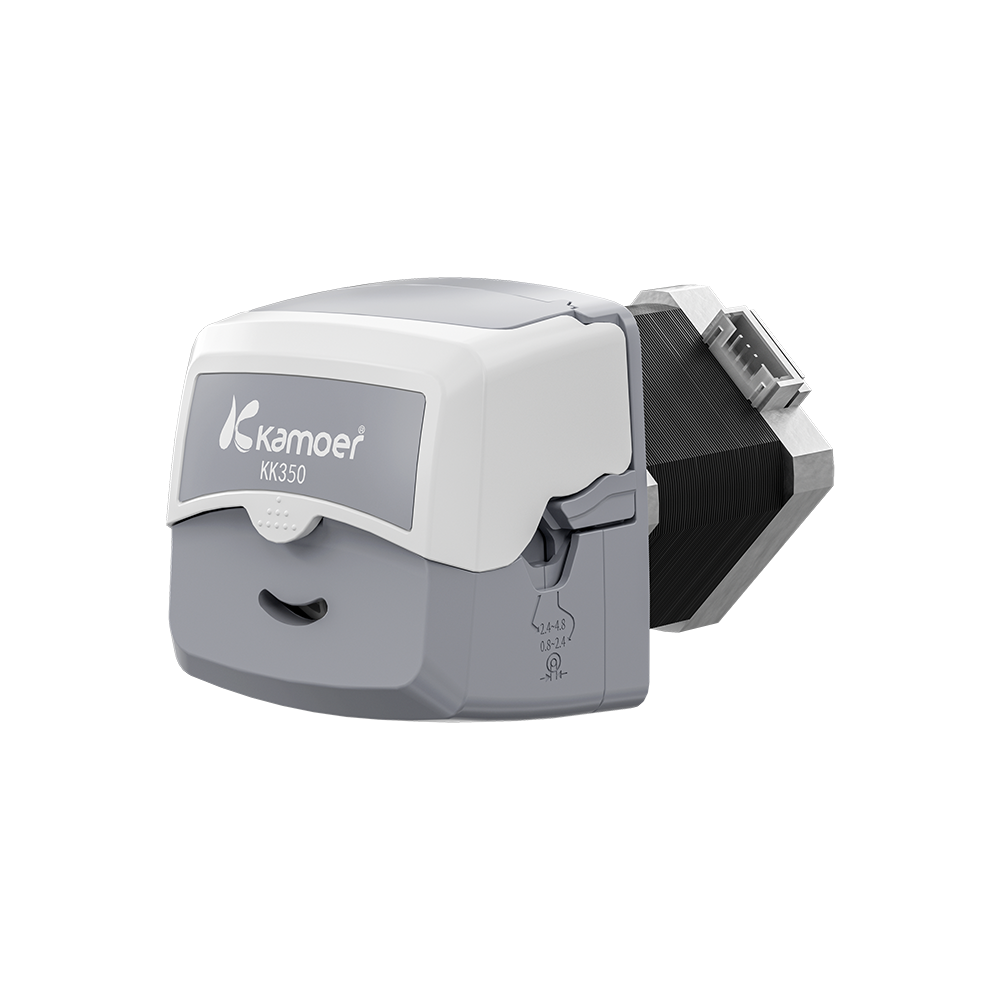
Kamoer provides multiple peristaltic pump models that can be considered for beverage dispensing, syrup dosing, concentrate transfer and equipment cleaning systems. The final model should be selected based on liquid viscosity, target flow rate, dosing volume, tube material, installation space, noise requirement and control method.
Kamoer KHS Series: Compact Pump for Beverage Machines
The Kamoer KHS peristaltic pump is suitable for compact beverage equipment where stable liquid handling and efficient integration are required. Kamoer’s official home beverage machine case describes KHS as a solution for handling liquids ranging from high-viscosity syrups to low-viscosity ingredients, with stable operation and consistent delivery.
Recommended applications:
- Home beverage machines
- Tabletop drink dispensers
- Syrup and flavor dosing
- Small beverage ingredient transfer
- Compact OEM beverage modules
Kamoer KDS1000: Medium-to-High Flow for Beverage and Food Equipment
The Kamoer KDS1000 peristaltic pump is suitable for applications requiring higher flow than small dosing pumps. Kamoer’s product information states that KDS1000 supports DC brushed motors and 24V stepper motor options, with a listed flow range of 960–1100 ml/min depending on configuration.
Recommended applications:
- Beverage concentrate transfer
- Syrup delivery in commercial drink equipment
- Liquid seasoning or sauce transfer
- Smart cooking machines
- Medium-flow OEM dosing modules
Kamoer KDS3000: High-Flow Option for Milk Tea and Beverage Preparation
KDS3000 is positioned by Kamoer as a cost-effective high-flow peristaltic pump. The official product page highlights large flow, easy tube replacement and multiple motor/tube options; Kamoer’s milk tea machine case also recommends KDS3000 for efficient beverage preparation.
Recommended applications:
- Milk tea machines
- Commercial beverage dispensers
- Fast drink preparation systems
- Syrup, tea concentrate and milk-based liquid transfer
- High-frequency start-stop beverage equipment
Kamoer KDS5000: High-Flow Transfer for Larger Beverage Systems
For larger beverage equipment or higher-volume transfer, Kamoer KDS5000 can be considered. Kamoer’s product page describes KDS5000 as a dual-motor high-flow peristaltic pump, and the technical parameters page lists flow rates of 3000 ml/min and 4300 ml/min depending on tube configuration.
Recommended applications:
- Large-flow beverage ingredient transfer
- Bulk syrup or concentrate delivery
- Sauce and liquid food transfer
- Centralized beverage preparation systems
- High-volume OEM equipment
Kamoer KHL2000: Large-Flow Pump for Liquid Transfer Applications
Kamoer KHL2000 is another large-flow peristaltic pump option. The official technical parameters page lists a maximum flow rate of at least 1450 ml/min depending on configuration.
Recommended applications:
- Beverage liquid transfer
- Concentrate delivery
- Medium-to-large flow OEM systems
- Liquid food equipment requiring stable transfer
Kamoer KFS Series: Compact Pump for Auxiliary Liquid Lines
The Kamoer KFS micro peristaltic pump supports different voltage options and multiple motor choices, making it suitable for compact equipment integration where smaller auxiliary liquid lines are needed.
Recommended applications:
- Cleaning liquid dosing
- Flavor additive dosing
- Small-volume liquid transfer
- Compact beverage equipment modules
- Auxiliary liquid circuits in automated machines
How to Select the Right Pump for a Beverage Dispenser
Selecting a peristaltic pump for beverage equipment should not be based only on maximum flow rate. OEM manufacturers should evaluate the whole fluid system.
1. Define the Liquid
Is the liquid water-like, syrup-like, milk-based or highly viscous? Does it contain sugar, pulp, particles or oil-based ingredients? The liquid property affects flow rate, tube life and motor load.
2. Confirm the Target Dose
A coffee machine may only need a few milliliters of syrup per cup. A milk tea machine may require much higher volume for tea, milk or fructose. A large beverage system may need continuous transfer instead of small-volume dosing.
3. Check Tube Material Compatibility
The tubing must be compatible with the liquid and suitable for the intended food-contact application. For beverage equipment, tube material selection should consider hygiene, taste impact, chemical compatibility and local regulatory requirements.
4. Evaluate Installation Space
Beverage machines often have limited internal space. Pump size, tube direction, connector position and mounting method should be considered early in the design stage.
5. Consider Noise and User Experience
For coffee machines, tabletop dispensers and office beverage equipment, noise can affect user experience. Motor type, pump speed and pump head structure should be evaluated during testing.
6. Validate Tube Life and Maintenance
The tube is the main consumable component in a peristaltic pump. OEM manufacturers should test tube life under real liquid, real speed, real duty cycle and real ambient conditions.
Why Beverage OEMs Choose Peristaltic Pumps
For syrup and concentrate dosing, peristaltic pumps offer a practical balance of hygiene, accuracy, simplicity and design flexibility. Compared with pump types where liquid enters internal pump chambers, the tube-based structure of a peristaltic pump makes maintenance easier and reduces the risk of internal residue.
For beverage equipment manufacturers, this means:
- Easier cleaning and maintenance
- Flexible adaptation to different liquid ingredients
- More consistent dosing for standardized recipes
- Simple replacement of the liquid-contacting component
- Compact integration into beverage machines
- Suitable control for automated drink preparation
Conclusion
Peristaltic pumps are an effective solution for accurate syrup and concentrate dosing in beverage dispensers. Their isolated fluid path, controllable dosing performance and easy-maintenance structure make them suitable for soda machines, coffee machines, milk tea equipment, juice dispensers and cleaning liquid delivery systems.
For OEM beverage equipment manufacturers, Kamoer provides multiple peristaltic pump options, including KHS, KDS1000, KDS3000, KDS5000, KHL2000 and KFS series. The right model depends on the target liquid, dosing volume, flow rate, viscosity, installation space and control requirements.
By selecting the right peristaltic pump, beverage equipment manufacturers can improve taste consistency, simplify maintenance and build more reliable automated beverage systems.
Looking for a peristaltic pump for beverage dispensers, syrup dosing or concentrate transfer?
Contact Kamoer to discuss your liquid type, target flow rate, tube material, installation space and control method. Our team can help you evaluate the right pump solution for your beverage equipment.