







Fluid solutions for flow batteries
2025-08-20 16:41:00
In 1974, scientist L.H. Thaller introduced a groundbreaking electrochemical energy storage technology—the redox flow battery (RFB). Unlike conventional batteries, the greatest innovation of flow batteries lies in storing positive and negative electrolytes in external tanks, which are circulated into the cell stack during operation. This unique design provides greater flexibility, scalability, and safety. Among them, aqueous organic flow batteries stand out for their high safety and environmental friendliness, making them a key solution in modern energy storage.
Working Principle
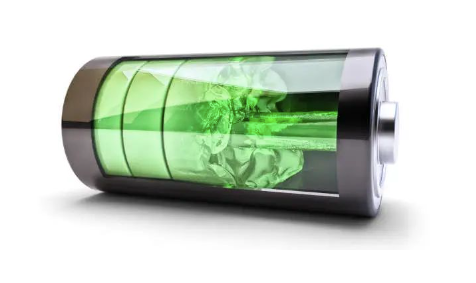
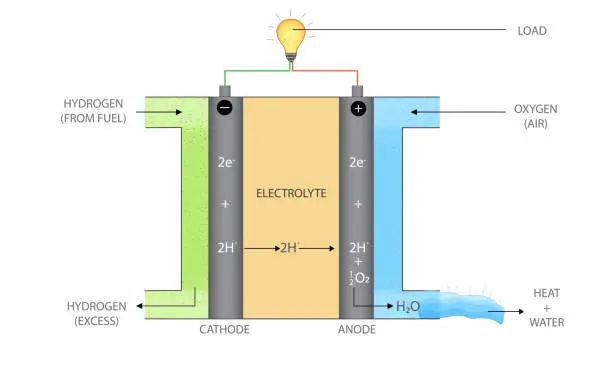
Flow batteries store and release energy through reversible redox reactions between two electrolytes that are continuously circulated on either side of an ion-exchange membrane. With water as the solvent, aqueous systems offer superior safety and sustainability, making them highly attractive for renewable energy storage.
In research and development, laboratory pumps play a vital role by supporting:
-
Electrolyte Circulation – Ensuring stable transfer of electrolytes between cell tanks.
-
Solution Mixing – Combining electrolytes of varying concentrations or compositions for consistent performance.
-
Oxidant/Reductant Delivery – Precisely feeding redox agents to drive efficient energy storage and release.
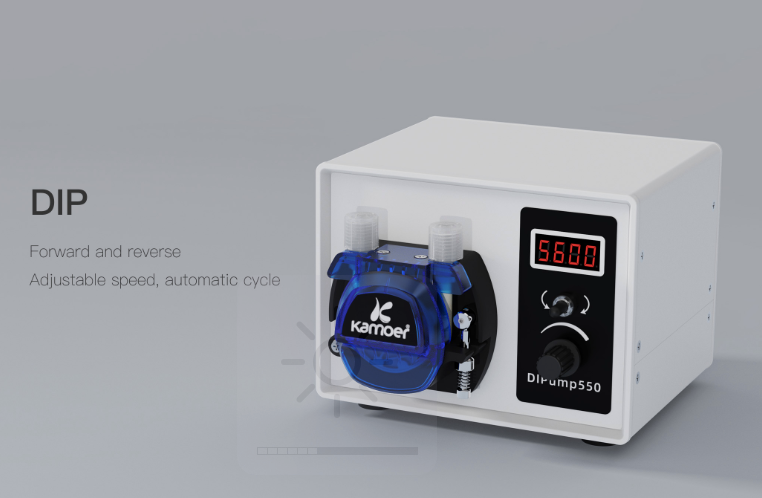
Kamoer DIP550 Laboratory Pump: Key Advantages
The Kamoer DIP550 laboratory pump (flow range: 0–450 mL/min) has been widely adopted in flow battery research projects, delivering critical performance features:
-
Broad Chemical Compatibility – Handles electrolytes such as sulfuric acid, mixed vanadium, iron-chromium, zinc-bromine, nickel, and iron-based solutions.
-
Robust Environmental Adaptability – Operates reliably from -20℃ to 60℃ with eco-friendly engineering plastics for durability.
-
Power-Off Memory – Automatically saves parameters during unexpected shutdowns, preventing data loss.
-
Flexible Operating Modes – Supports fully automatic, semi-automatic, and manual operation modes.
-
High-Precision Control – Stepper motor drive with speed resolution down to 1 RPM for precise liquid handling.
-
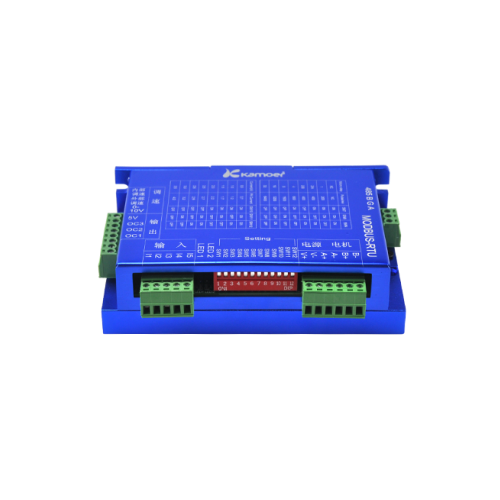
Multiple Control Options – Compatible with rotary encoders, footswitches, external analog signals (4–20 mA, 0–5 V), and RS485 (Modbus) communication.

Accelerating Flow Battery Research and Energy Innovation
The integration of Kamoer DIP550 pumps into flow battery systems has significantly advanced the development of functional membranes, new storage materials, and electrochemical mechanisms. As a promising solution to global energy and environmental challenges, flow batteries continue to show great potential.
In this era of technological innovation, Kamoer laboratory pumps are not only reliable research tools but also key enablers of the future of energy storage. With outstanding performance and advanced technology, Kamoer supports scientists worldwide in exploring electrochemical energy storage, contributing to global sustainable development.
Related Products